I'm a Research Scientist and founding team member at Sakana AI. My goal is to make powerful AI accessible to anyone, anywhere. I pursue this through efficient training, knowledge distillation, and model composition. Research direction in one figureSame performance. Less compute.Conceptual—not to scale. I work end to end—from first-principles formulation and implementation to large-scale experiments and open release. Previously, I led the end-to-end development and open release of Japanese multimodal models at Stability AI. I hold an M.S. in Applied Mathematics (probability, statistics, and information theory) from Waseda University.
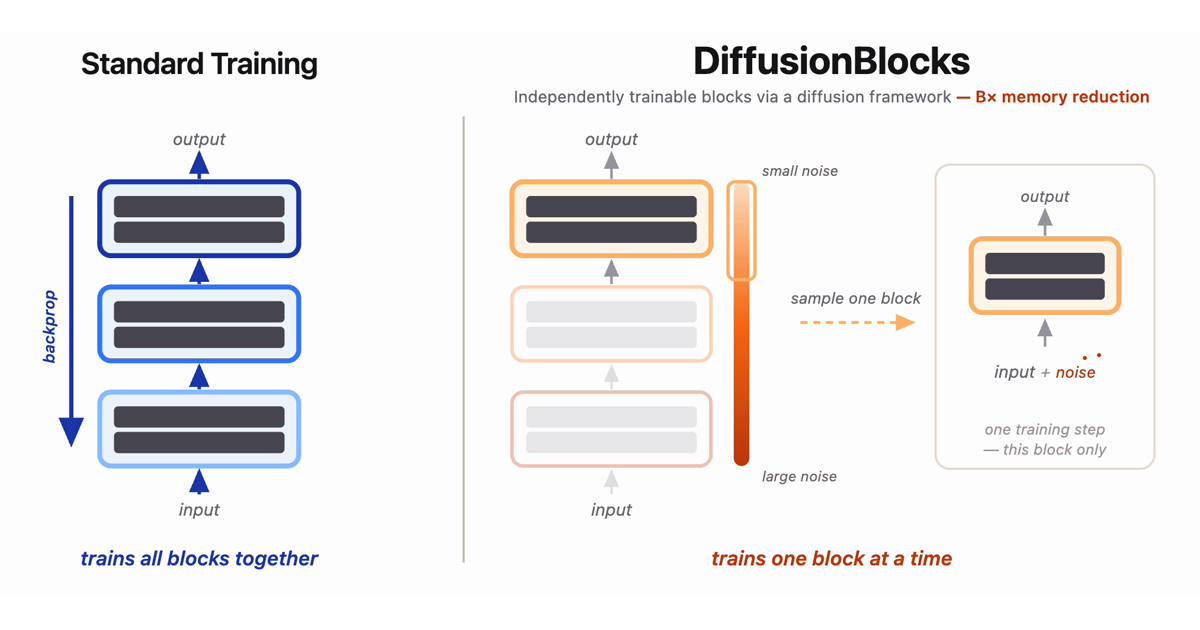
DiffusionBlocks trains residual networks one block at a time, storing activations for only one block during training. It reduces activation memory by a factor of B while matching end-to-end performance across five architectures for vision and language.
AuthorsMakoto Shing, Kou Misaki, Han Bao, Sho Yokoi, Takuya Akiba
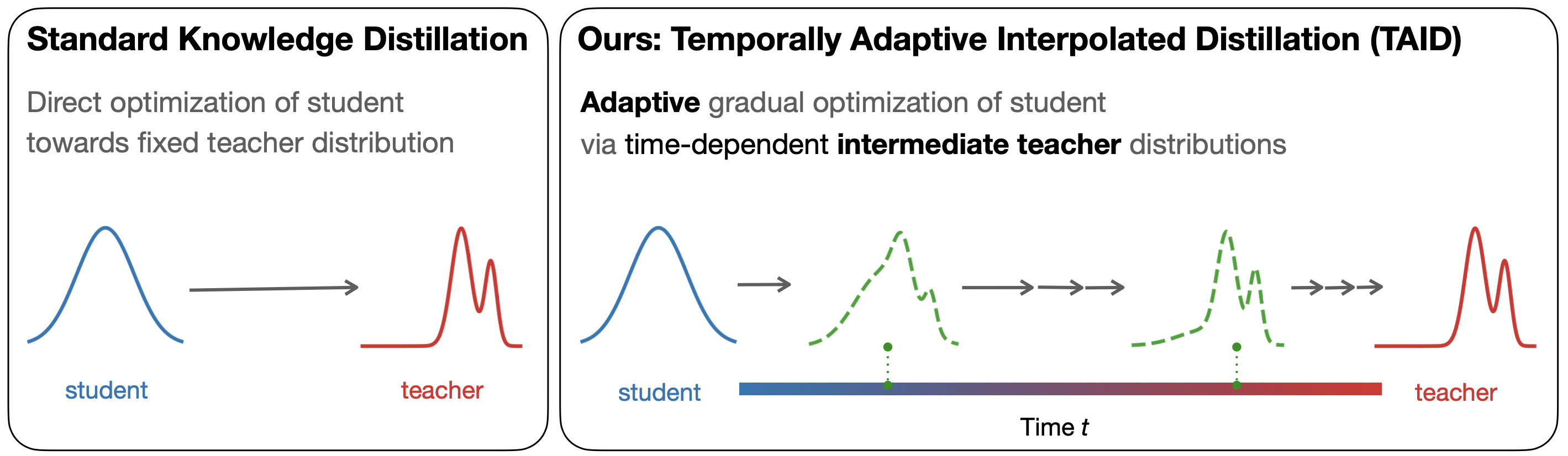
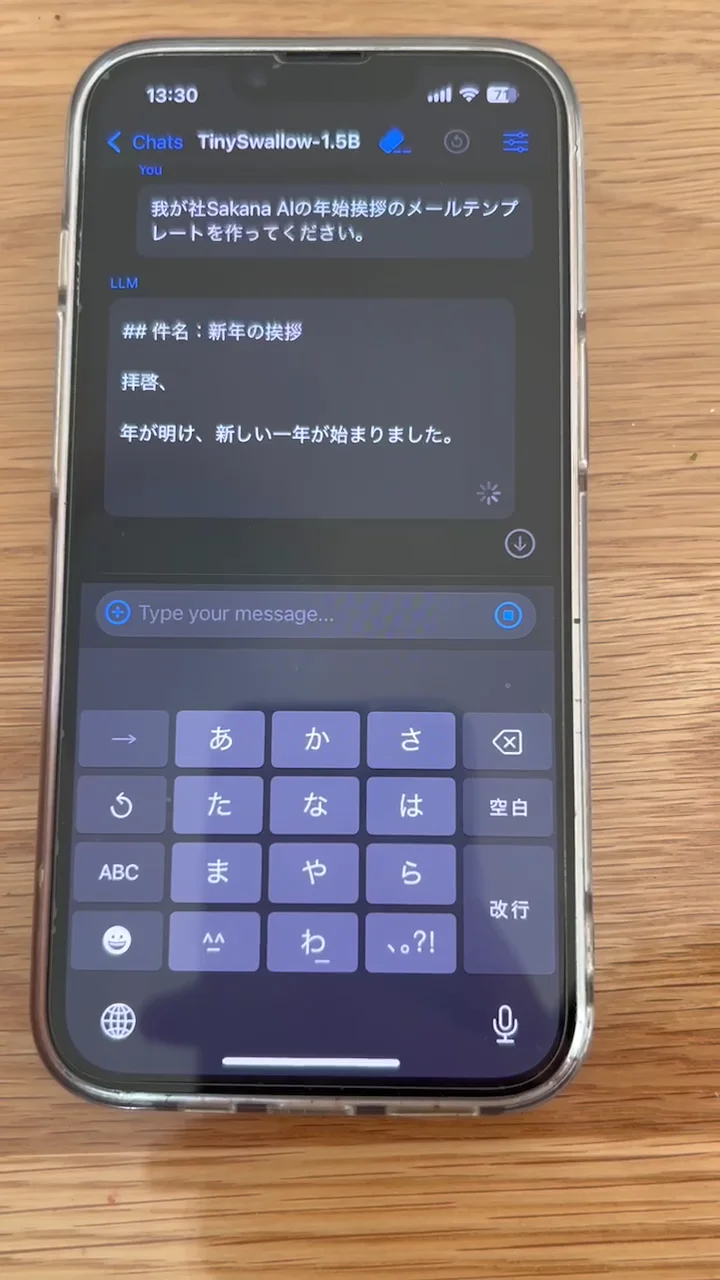
TAID adapts the teacher distribution to the student's learning progress, stabilizing distillation across large capacity gaps. We validated it across pre-training and instruction tuning for language and vision-language models. Using TAID, I developed TAID-LLM-1.5B for English, TAID-VLM-2B for vision-language tasks, and TinySwallow-1.5B for Japanese. TinySwallow demonstrates fully local inference on an iPhone.
AuthorsTakuya Akiba, Makoto Shing, Yujin Tang, Qi Sun, David Ha
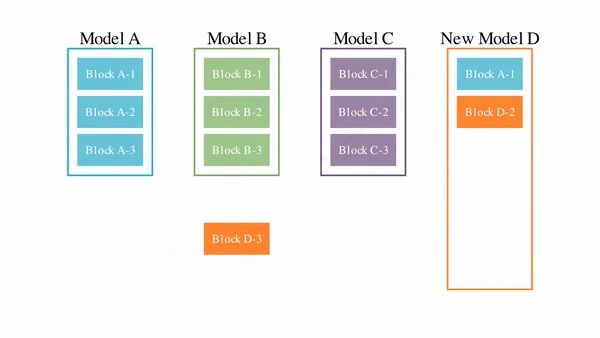
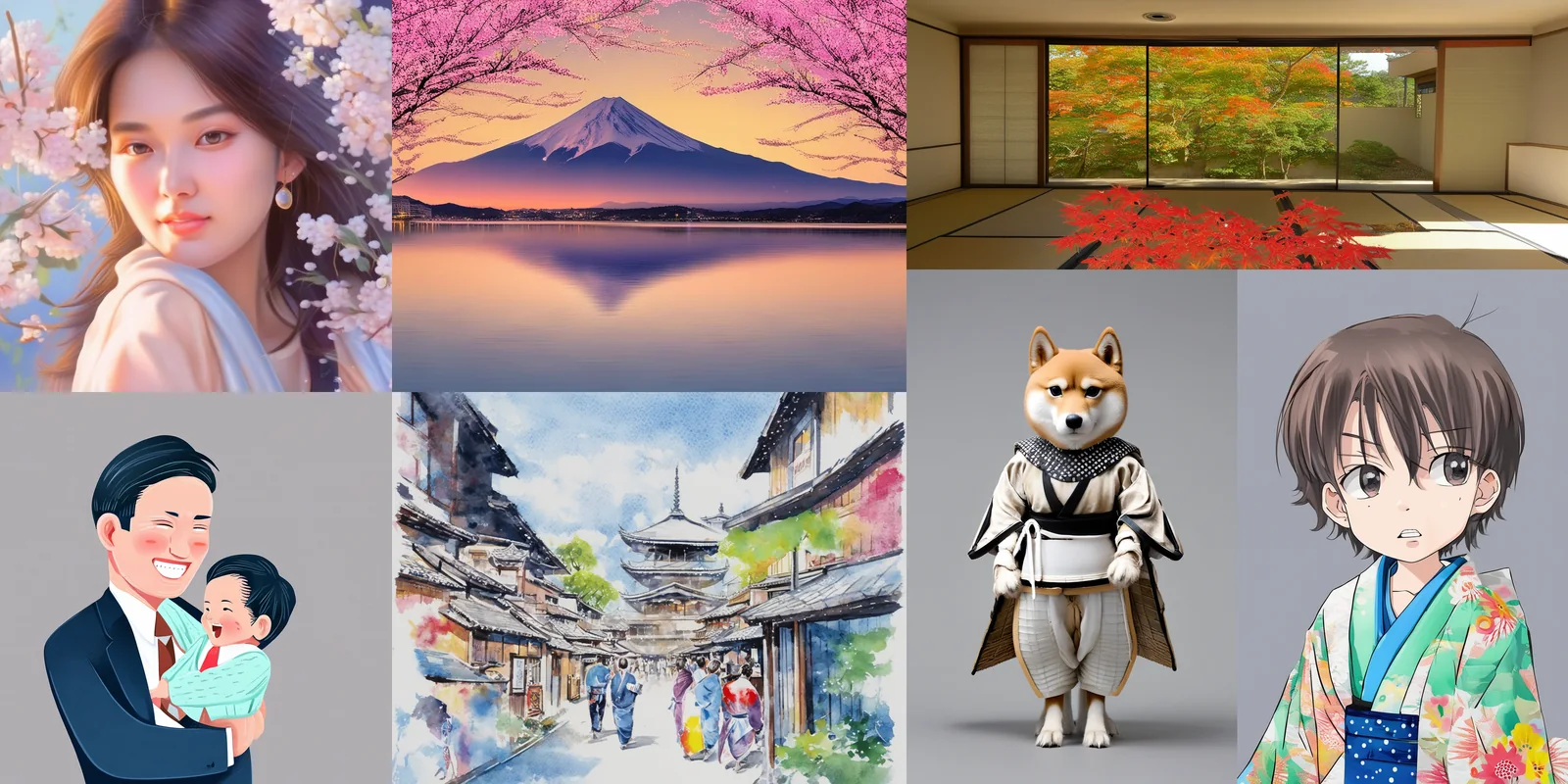
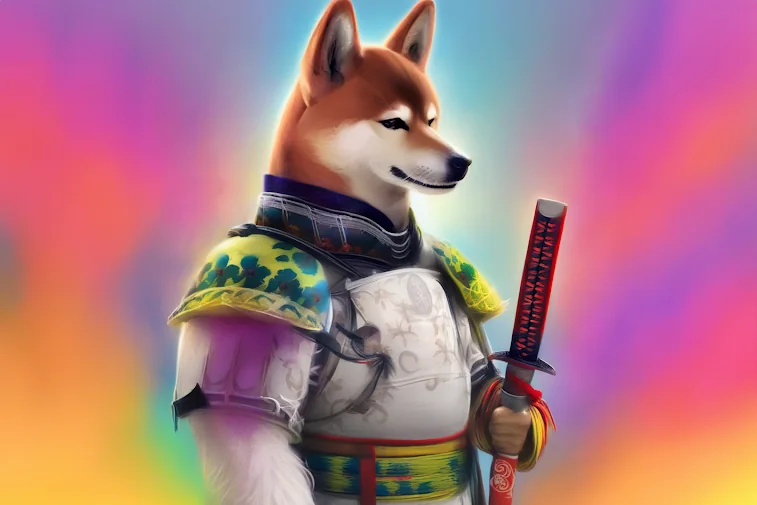
Evolutionary search automatically discovers model-merging recipes without gradient training. I extended the parameter-space method to vision-language and diffusion models. The resulting releases include EvoVLM-JP-v1-7B, a Japanese vision-language model, and EvoSDXL-JP, which generated Japanese images in four steps—10× faster than the 40-step Japanese baseline in our evaluation. EvoSDXL-JP later became the base for Evo-Ukiyoe and Evo-Nishikie.
Percept-Lens evaluates detector transfer across broad distribution shifts. Across 39 public datasets and 7.1 million images, a closed-form Mah-NCM head on frozen features outperformed released heads in 10 of 11 matched comparisons and reached 90.89% accuracy with 219 labeled images.
Local Curvature Smoothing uses Stein's identity to bypass the expensive Jacobian trace in score matching. It reports results comparable to denoising score matching on standard metrics and demonstrates image generation at 1024×1024 resolution.
I led the training and open release of TAID-LLM-1.5B (English), TAID-VLM-2B (vision-language), and TinySwallow-1.5B (Japanese). At release, these models achieved state-of-the-art performance in their respective size classes in the reported evaluations.
I developed TinySwallow with the Swallow team, distilling knowledge from a 32B teacher with TAID and demonstrating fully local inference on an iPhone.
TinySwallow-1.5B on an iPhone, at actual generation speed.
Japanese Stable Diffusion XL
Project lead
I led the end-to-end development and release of a Japanese-specific SDXL, adapting it for Japanese prompts and cultural expressions with a Japanese-compatible text encoder and OFT.
I led the development and release of a Japanese image–text representation model for retrieval, zero-shot classification, and multimodal generation systems.
I led the AI research and implementation on rinna's side, building an assisted workflow used to support anime background production for the short film.